
Courage Under Fire: Jeremy Daniels and Courtney Williams Named 2026 Shaw Marven Award Winners

The 2026 Shaw Marven Award honors two extraordinary whistleblowers whose courage has reshaped the national conversation about accountability within the United States Armed Forces. Jeremy Daniels and Courtney Williams stand as powerful symbols of integrity—individuals who risked everything to expose wrongdoing that leadership refused to confront.
Their stories are different, but their courage is the same. Both paid a steep personal price for telling the truth. Both refused to be silenced. And both now join the distinguished lineage of Shaw Marven Award recipients whose actions have strengthened the military by demanding it live up to its own values.
Jeremy Daniels (U.S. Army): Fighting for His Life, and for Every Veteran Failed by the VA
A Soldier Exposed, Ignored, and Left to Fight Alone
Jeremy Daniels served in the United States Army, deploying to Iraq during some of the most intense years of the post‑9/11 conflict. Stationed at forward operating bases where burn pits operated around the clock, Daniels lived and worked in an environment saturated with toxic smoke.
These pits—some the size of football fields—burned everything:* Plastics* Medical waste* Vehicle parts* Chemicals* Human waste* Ammunition packaging* Electronics
For soldiers like Daniels, there was no escape. The smoke drifted into sleeping quarters, latrines, dining tents, and motor pools. It coated uniforms, seeped into lungs, and became part of daily life.
Daniels' duties placed him in direct proximity to the pits for extended periods, often during long shifts that required him to remain outdoors amid the thick fumes. He breathed in the toxins day after day, month after month—exposure that medical experts now recognize as a leading cause of severe respiratory and systemic illness among Iraq and Afghanistan veterans.
But when he returned home, the system that promised to care for him failed him completely.
Despite clear symptoms of burn‑pit–related illness, he was never properly diagnosed, never given the correct medication, and never treated with the urgency his condition demanded. Instead, he was left to deteriorate.
A Body in Decline, a Spirit Unbroken
Jeremy Daniels has dropped from 200 pounds to just 109 pounds. His condition is not the result of neglect on his part—it is the result of institutional neglect by the VA, which repeatedly delayed, denied, or dismissed his medical needs.
Yet even as his health declined, Daniels did what whistleblowers do: he documented everything. His meticulous records—dates, symptoms, denials, delays, and dismissals—now form one of the most detailed personal archives of VA medical failure in recent years.
A Fight for All Veterans
Daniels is not fighting only for himself. He is fighting for:* Veterans exposed to burn pits* Veterans denied proper diagnoses* Veterans dismissed or misclassified* Veterans who served honorably but are dishonorably served by the VA
His advocacy has drawn attention from national veterans' groups and policymakers who see his case as emblematic of a broader crisis.
Why He Was Selected
The Shaw Marven Committee praised Daniels for his "unwavering courage in the face of life‑threatening illness" and his "refusal to allow institutional neglect to define the fate of post‑9/11 veterans."
Jeremy Daniels is fighting for his life. He is also fighting for the lives of countless others
.Courtney Williams (U.S. Army – Military Police): The Whistleblower the System Tried to Silence
Exposing Abuse at Fort Bragg
Courtney Williams served in the United States Army, specifically within the Military Police community at Fort Bragg. Her whistleblowing journey began when she reported sexual abuse involving personnel within the Military Police structure—allegations that demanded immediate action to protect victims.
But instead of protection, she encountered silence.
Her disclosures expanded as she uncovered evidence of drug trafficking and sex trafficking involving individuals connected to the Military Police environment. These were not isolated incidents; they reflected a pattern of criminal activity that leadership refused to confront.
Retaliation That Escalated Into Federal Detention
When Williams refused to back down, the retaliation intensified. What began as administrative pressure escalated into a federal indictment under the Espionage Act.
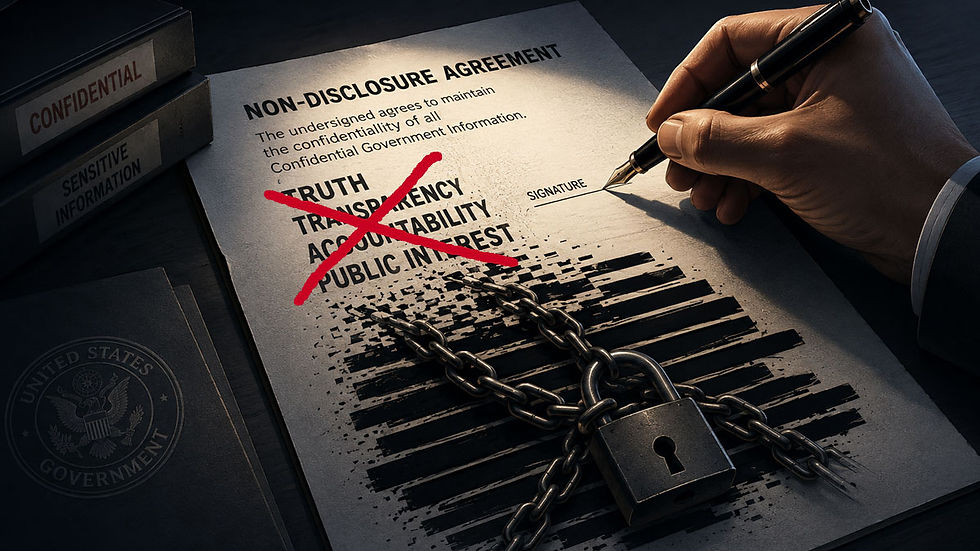
She is charged under the ever‑present Espionage Act—the government’s fallback weapon against whistleblowers who expose waste, fraud, and abuse inside military or intelligence components of the U.S. Government. The Act, written in 1917 to prosecute wartime spies, makes no distinction between a foreign agent selling secrets and a whistleblower providing information to expose abuse. Its use against Williams reflects a long‑standing pattern: when service members report internal misconduct, the Espionage Act becomes an often used tool to silence them.
A Case That Has Become a Rallying Cry
Williams' case has drawn increasing attention from:* Whistleblower protection organizations* Military justice reform advocates* Survivors of sexual assault within the armed forces* Civil rights groups are concerned about the treatment of women and service members of color.

Comments